|  News  |  Digital Products  |  Recipes  |  Shopping  |  Personal Care  |  Amazon Gift Ideas
Showing posts with label Heart attack. Show all posts

Wednesday, 15 January 2014

Cooked Tomatoes Excellent for Heart


We know that eating tomatoes can enjoy the benefits of lycopene and its protective effects against infarction. But did you know that cooked tomatoes are better protection than raw tomatoes?

A Finnish researches study drew attention to the benefits of tomatoes for heart health. For 12 years, people had been followed by Finnish scientists and, ultimately, the people who had a high level of lycopene in the blood had decreased their risk of heart attack by 59%.

New led by researchers at the University of Verona, Italy, shows that lycopene, the antioxidant that gives tomatoes their rich red color and protects the heart against the formation of blood clots, is present in higher proportions in cooked tomatoes.

According to these researchers, daily consume 80 g of a homemade tomato sauce would offset the adverse effects of a high fat on the blood vessel wall and helps prevent atherosclerosis, that is to say the lipid deposition in the arterial wall. Sauces, soups, pizza baked tomatoes are also advised to enjoy the benefits of lycopene that would "almost as good" as some drugs (we're talking statins ) to lower cholesterol!

Monday, 30 December 2013

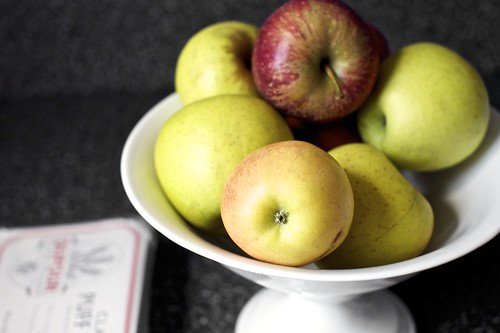
An apple a day may protect against heart attack, scientists say

Scientists claim that those who want to do prevention of cardiovascular disease without drugs, should only consume of apple fruit.

Adding to the diet of one apple a day is capable of better than drugs reduce mortality from heart attacks and strokes among people over 50 years, established by British scientists, whose work is published in the British Medical Journal ( BMJ ).

Researchers from the University of Oxford (University of Oxford) estimated that drugs to lower cholesterol (statins) are taking in the UK 5.2 million people. Another 17.6 million people could receive such drugs if they are proposed at the national level as a means of primary prevention of cardiovascular disease in people over 50 years.

Using a mathematical model, the authors calculated that the daily intake of statins in the second group of the population could reduce the number of deaths due to heart attacks and strokes by 9.4 thousand cases a year. The addition to the diet of an apple a day can prevent vascular 8,5 thousand deaths among 70% of the UK population aged over 50 years.


Scientists remind us that taking drugs that reduce cholesterol, has a number of potential side effects, such as myopathy and diabetes. They emphasize that none of the patients already taking statins should not replace them with apples. However, those who want to do the prevention of cardiovascular disease without drugs, we just need to add more fruits in the diet.


Monday, 28 January 2013

Symptoms of heart attack

So you recognize a heart attack 
The most common symptoms

The sooner a heart attack is treated, the greater the chance of survival. You have therefore in our interest to have a heart attack as soon as possible to recognize. These are some of the most common symptoms.

1. Pain in the chest
Pain or discomfort in the chest is the most common symptom of a heart attack. The pain may be mild, so people do not immediately think of something serious as a heart attack. They will often assume that the pain does go away.

2. Discomfort in the upper body 
Discomfort or pain in the upper body - not just in the chest - may indicate a heart attack. Be attentive to any strange or unusual symptom of your hip upwards. This can be a heavy, heavy, painful or uncomfortable sensation in the chest, back, neck, shoulders, arms, wrists, elbows, between the shoulder blades, in the jaw, throat, or even in the gums or the earlobes. course you not every pijntje in this region of a heart attack thinking. Sitting heart problems or risk factors such as high blood pressure or high cholesterol in the family? Pay special attention to these symptoms then. If the pain is very intense, as there is no specific reason to do so, if it gets worse during exercise or when the pain but do not want to go, you should seek medical advice immediately.

3. Stomach and intestinal problems 
Also gastrointestinal problems may be an indication of heart problems. If the pain feels different than 'normal' gastrointestinal problems may need extra attention. Do this especially if you are already struggling with risk factors such as high blood pressure or vascular problems.

4. Flu-like symptoms 
It happens often that people seem to suffer from a very severe flu, while they actually have heart problems. Extreme fatigue and exhaustion that persists for days, gastrointestinal problems and a general ill feeling may be symptoms of a heart attack. These symptoms are easily confused with flu. So be on your guard if you feel that the symptoms are very abnormal.

5. Dyspnea 
Shortness of breath is also a major symptom of a heart attack. Be alert to. You do not necessarily pain in your chest to have shortness of breath when speaking of a heart attack.

Strawberries Reduce risk of heart attack

That Researchers from Harvard in Circulation: Journal of the American Heart Association.

The researchers looked at data from 93,600 women aged 25-42 years. They filled for 18 years every four years in a questionnaire about their eating habits.

During the study, 405 participants a heart attack . The women who ate the most blueberries and strawberries, were 32 percent lower risk of heart attack than women who ate berries at most once a month. 

The researchers adjusted for factors that could skew the results such as age, hypertension, BMI, exercise, smoking, alcohol consumption and the incidence of heart attacks in the family.

 Flavonoids

 Blueberries and strawberries, but also grapes, eggplant and other fruits and vegetables, contain many flavonoids. The researchers specifically looked blueberries and strawberries, because they are much eaten in the United States. A particular variant of flavonoids, anthocyanidin, has a beneficial effect on the heart and blood vessels. They dilate the veins and may prevent the formation of fatty deposits in the arteries (plaque).